
Peak season doesn't create operational problems. It exposes the ones that were already there.
I have watched this play out across properties for years. When occupancy rises, small gaps in hotel operations stop being invisible. A room that isn't marked ready on time. A maintenance request that sits in someone's phone. A special guest request that never reaches the right team. At quieter occupancy, people can cover for broken handoffs. At peak, there is almost no margin left.
That is why preparing for peak season should not simply mean adding more people to the roster. It should mean strengthening the systems, workflows and coordination that help the team you already have operate without constant firefighting.
Here is the hotel operations checklist I walk properties through before the rush begins.
1. Review the complete room-readiness journey
Start with the workflow that quietly decides guest experience every afternoon: checkout to ready-for-check-in.
Look at how information actually moves between front office, housekeeping and maintenance. Not how the SOP says it moves. How it moves on a busy Friday.
Ask yourself:
- Is housekeeping immediately aware when a guest checks out?
- Can supervisors clearly see which rooms should be prioritised?
- Are maintenance issues found during cleaning reported immediately?
- Is the front desk seeing the latest room status, or an hour-old version of it?
- Are early arrivals and VIP rooms automatically prioritised?
- Does everyone work from the same operational view?
At high occupancy, even a 15-minute delay can matter. An early arrival waiting in the lobby feels that delay personally. The goal is not simply to clean rooms faster. The goal is to remove the waiting time between teams.
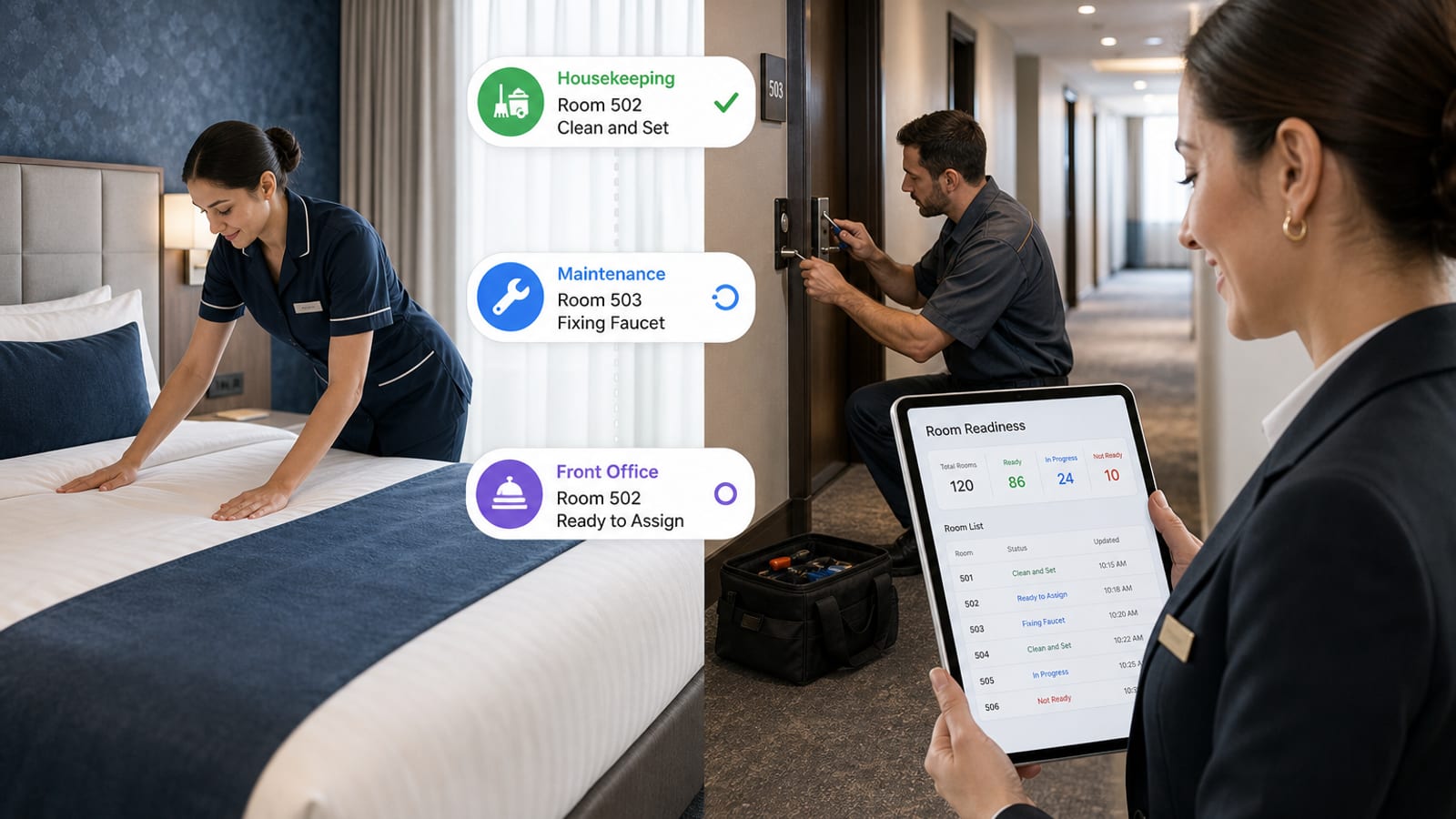
If you want a deeper look at this handoff chain, I wrote about it in Room Readiness: Where Hotel Teams, AI and the PMS Meet.
2. Complete preventive maintenance before demand peaks
Peak season is the wrong time to discover that the AC in 412 has been complaining for three weeks, or that hot water on the third floor is unreliable.
Review frequently reported maintenance issues before occupancy climbs. Prioritise the systems that take rooms out of inventory or turn a stay sour fast:
- HVAC and air-conditioning checks
- Plumbing and hot-water systems
- Door locks and access systems
- In-room electrical equipment
- Wi-Fi and guest connectivity
- Elevators and high-use common-area equipment
- Recurring guest complaints that never quite got closed
Preventive maintenance protects more than equipment. It protects room inventory. A room unexpectedly placed out of order on a sold-out weekend is not just an ops inconvenience. It is revenue you cannot recover and a guest you may have to reaccommodate under pressure.
3. Give every department the same operational picture
Peak season is not a housekeeping problem or a front-office problem. It is an operations coordination problem.
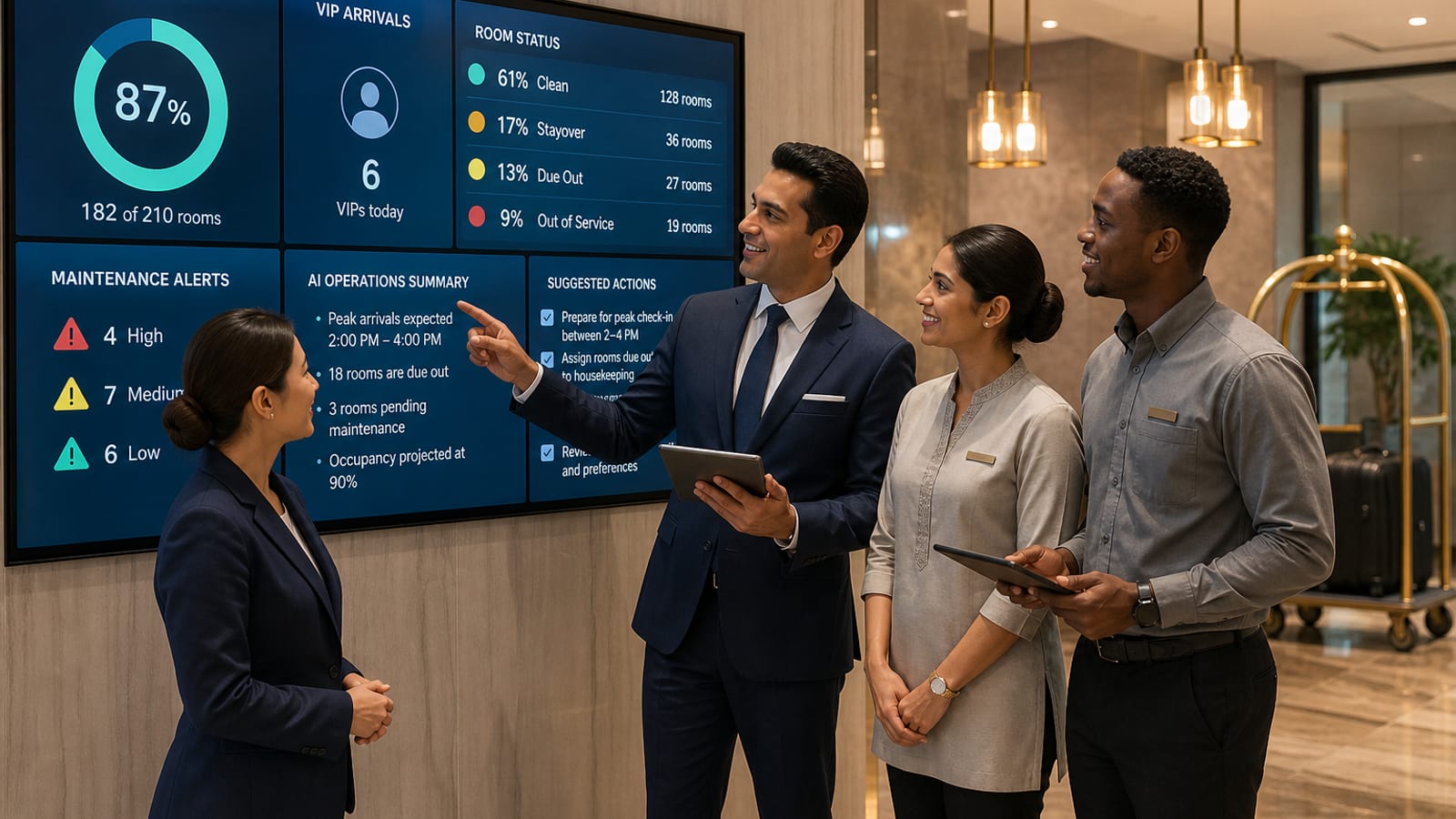
Front office, housekeeping, maintenance and hotel management should begin the day with a shared understanding of:
- Occupancy and expected arrivals
- Departures and room turnaround requirements
- Early check-ins
- VIP arrivals
- Group arrivals
- Special guest requests
- Out-of-order rooms
- Pending maintenance
- Known operational bottlenecks
When these updates live across phone calls, WhatsApp groups, paper sheets and multiple systems, teams spend the morning reconstructing reality before they can act on it. That reconstruction tax gets expensive the moment occupancy spikes.
A shared operational layer makes it easier for everyone to act on the same information. I have written more about that idea in Why the Future of Hospitality Depends on Smarter Operations.
4. Review SOPs before seasonal teams arrive
Peak season often brings temporary employees, seasonal hiring, changed rosters and people covering roles outside their usual beat. That is exactly when unclear SOPs stop being a paperwork issue and start showing up as guest complaints.
Before the season begins, review the workflows that have the greatest impact on guest experience. Make sure teams understand:
- Service standards
- Response-time expectations
- Escalation procedures
- Room-cleaning and inspection standards
- Maintenance escalation
- VIP handling
- Lost-and-found procedures
- Guest complaint handling
- Shift handover expectations
When workload increases, consistency becomes one of the most important forms of quality control. You cannot personally supervise every interaction. Clear SOPs are how the property still sounds like one hotel.
5. Plan for the things you cannot predict
Even a well-prepared hotel will face unexpected situations. A group arrives earlier than planned. Several rooms suddenly need maintenance. A team member becomes unavailable. A guest request needs three departments at once.
The objective is not to predict every possible problem. It is to make sure that when something unexpected happens, the hotel already knows who should respond, who should be informed, and when the issue should be escalated.
Good contingency planning prevents operational surprises from becoming guest-experience problems. Write the ownership down. Practice the handoff once. Peak is a terrible time to invent escalation paths in real time.
6. Let managers manage, instead of chasing updates
During peak season, hotel managers should not spend their shifts calling different departments for status updates. That is one of the most expensive habits I still see on properties that are otherwise well run.
Managers should be able to quickly understand:
- Which rooms are delayed
- Which requests are still pending
- Where maintenance is blocking room readiness
- Which teams are overloaded
- Which guest issues need escalation
- What needs attention right now
Operational visibility lets managers intervene where they can have the greatest impact. This is also where AI becomes genuinely useful, not as another dashboard to stare at, but as a layer that summarises what is happening and highlights the next actions that need a human decision.
From hotel systems to coordinated hotel operations
Hotels already use plenty of software: PMS platforms, telephony, maintenance tools, WhatsApp, POS systems, internal chat. The challenge is rarely the absence of tools. The challenge is that those tools do not always coordinate the work between people.
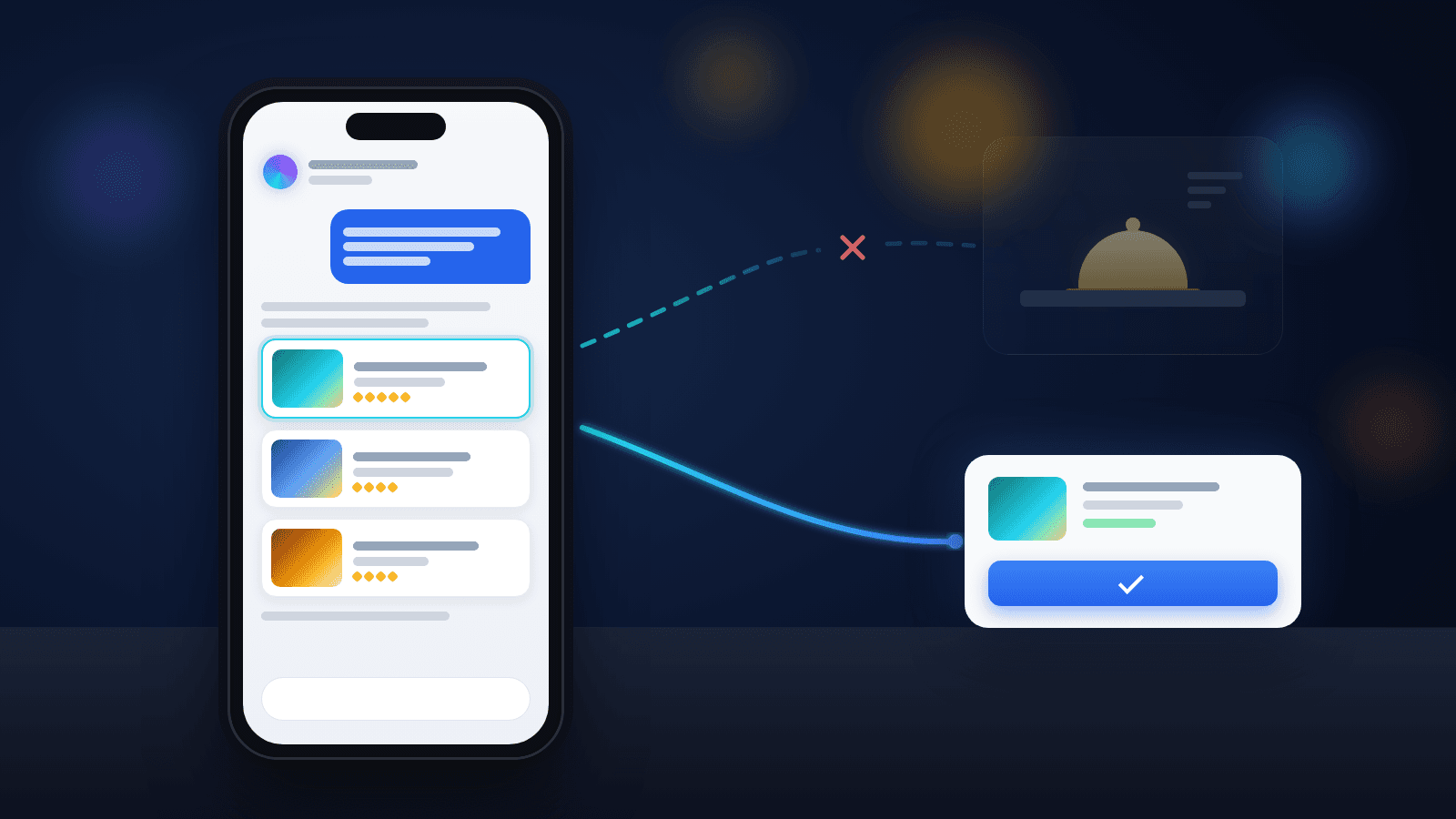
That is the gap we are building HeyKoala to close. HeyKoala is an agentic AI operating layer for hospitality. AI agents can interact with guests through voice and WhatsApp, then connect operational requests with hotel teams and the systems those teams already use.
In practice, a guest call can move like this:
Guest calls front desk → AI understands the request → identifies the guest or room → creates or routes the request → alerts the relevant team → follows the status → keeps the guest or front desk informed.
The same pattern supports reservation requests, housekeeping needs, maintenance coordination, restaurant enquiries and the repetitive front-desk interactions that otherwise eat a shift. During peak season, that means your team spends less time answering the same questions and chasing updates, and more time on the situations where human hospitality actually matters.
It does not replace your people. It removes the coordination tax that keeps them from guests.
Related video to watch
If you want a quick sense of how this looks in motion, this short video walks through how HeyKoala connects guest conversations to hotel operations:
Peak season rewards preparation
The busiest hotel does not have to be the most stressful hotel.
Properties that prepare their operations before demand rises are better positioned to deliver a consistent guest experience even when occupancy is close to 100%. And the best part is that the workflows you build for peak season do not disappear when the season ends.
Better room readiness, clearer ownership, faster escalation and stronger coordination become part of how the hotel operates every day.
Peak season is temporary. Better operations are not.
Is your hotel operationally ready for the next peak season?
See how HeyKoala's AI agents can help your front office, reservations and hotel operations teams handle guest interactions 24/7 while connecting requests with the systems your teams already use.
Explore a demo of HeyKoala, or start at HeyKoala.ai.
Frequently Asked Questions
What should hotels do to prepare for peak season?
Focus on systems and coordination before you focus on headcount. Review the room-readiness journey, finish preventive maintenance, give every department the same operational picture, refresh SOPs for seasonal teams, define escalation ownership, and give managers live visibility so they stop chasing updates by phone.
Why does room readiness matter so much at high occupancy?
At peak occupancy, even a short delay between checkout, housekeeping, maintenance and front office can turn into lobby waits, early-arrival friction and lost revenue. The bottleneck is usually waiting time between teams, not how fast a single room can be cleaned.
How can AI help hotel operations during peak season?
An AI operating layer can take guest calls and WhatsApp messages, identify the guest or room, route requests to the right team, track status, and summarise what managers need to act on next. That reduces repetitive front-desk load and the constant chase for updates across departments.
What is a shared operational layer in a hotel?
It is a connected view of occupancy, arrivals, departures, VIP and group activity, room status, out-of-order rooms, pending maintenance and open guest requests, so front office, housekeeping, maintenance and managers work from the same information instead of reconstructing it from chats and calls.
Does preparing for peak season still help after the season ends?
Yes. Clearer ownership, faster escalation, better room readiness and stronger coordination stay useful at every occupancy level. Peak season is temporary. Those operating habits are not.
Free tool · no signup
What is your front desk missing each month.
Missed calls and unanswered WhatsApp never reach your PMS, so they never make the morning report. Move five sliders and see what they cost your property, per month and per year.