Back to Blog

Hotels Don't Need More Software. They Need an Operating Layer.

Hotels do not need more software. They need an operating layer that makes the systems they already own work as one. Our CEO on how AI connects reservations, guest requests, and operations into a single experience.

Mohammed Azzan PatniMohammed Azzan PatniCo-Founder & Director7 min read
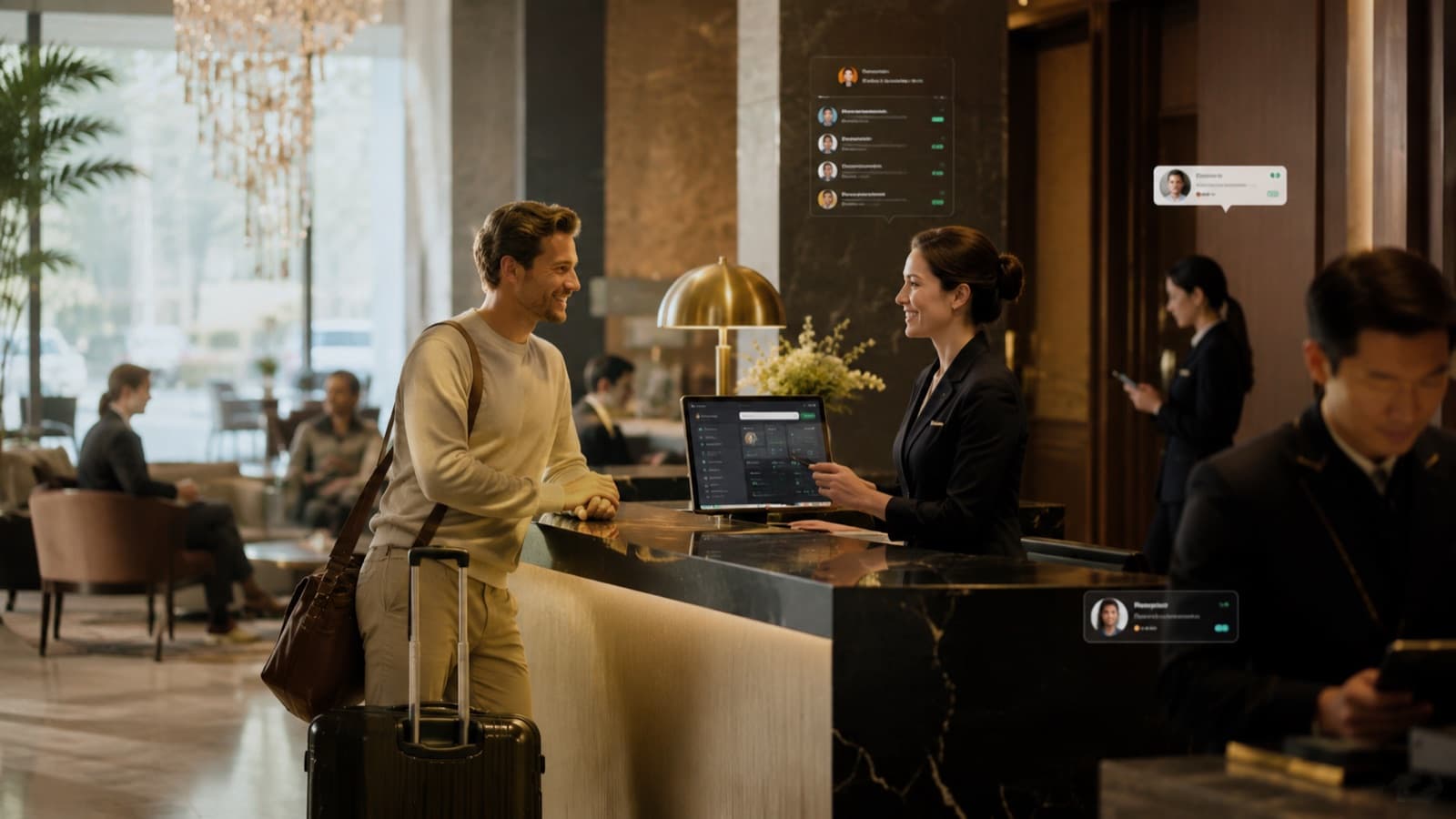
Hotel front desk where an AI operating layer connects guest conversations to reservations and service requests in real time

Hospitality has always run on people. Every memorable stay, every thoughtful recommendation, every small recovery when something goes wrong — it starts with a team that cares. I have spent enough time on hotel floors to believe that will never change. What is changing is what we ask that team to carry.

Rising costs, tighter staffing, and guests who expect an instant, personal answer at 2am have quietly redrawn the job. The old question in our industry was defensive: "How do I stop AI from replacing my team?" The better question — the one the best operators are now asking — is "How do I give my team the systems to deliver a great experience every single time?"

My answer, after building HeyKoala across hotels in three regions, is that hotels do not need more software. They need an operating layer that makes the software they already own work as one. Here is what I mean.

The short version

A hotel operating layer is a connective layer of AI that sits on top of your existing systems — PMS, booking engine, CRM, messaging, housekeeping — and makes them act as a single system. It listens to guest conversations across channels, understands the request, updates the right system, routes work to the right department, and replies to the guest — with little to no manual coordination. It does not replace your tools or your people. It removes the busywork that sits between them.

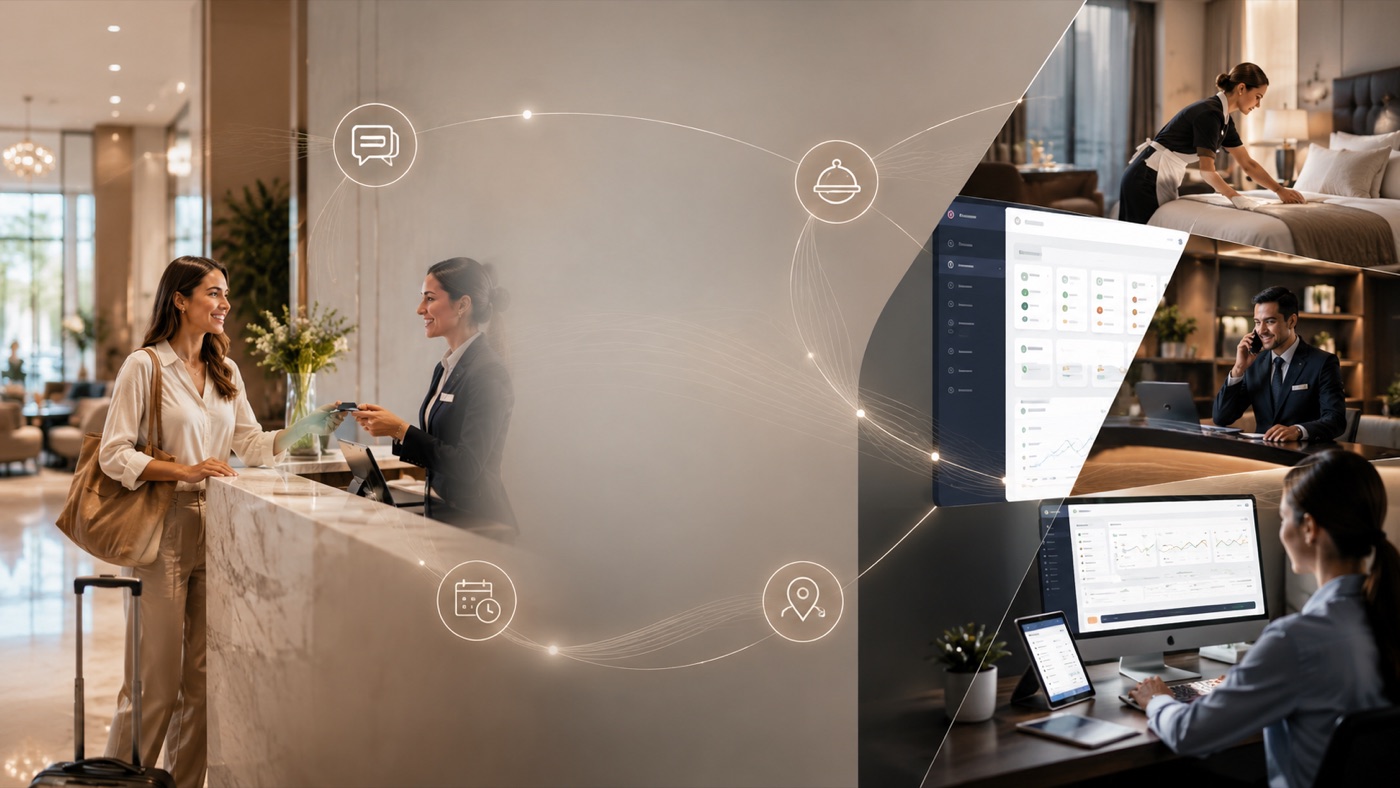
An AI operating layer connecting a hotel's guest messaging, reservations, housekeeping, concierge and operations dashboard into one workflow
An operating layer connects the tools a hotel already runs — messaging, reservations, housekeeping, concierge, analytics — so a single guest request flows through all of them automatically.

Guest expectations have outgrown disconnected systems

Modern travelers expect quick responses, personalized recommendations, and consistent service at every step — while booking, mid-stay, and long after checkout. Whether they are asking for a late checkout, extra towels, or a dinner recommendation, they want it to feel effortless.

Delivering that consistently takes more than a dedicated front desk. It takes connected systems working behind every interaction. And this is where most hotels quietly lose the plot — not for lack of effort, but for lack of plumbing.

What is a hotel operating layer?

A hotel operating layer is software that connects a property's existing systems and coordinates work across them, so that a single guest request is understood, actioned, and answered without a human stitching the tools together by hand.

Most hotels already own everything they need. A Property Management System. A booking engine. A CRM. Messaging and communication platforms. Housekeeping and maintenance software. Each one is genuinely useful.

The problem is that they work in isolation. So your team becomes the integration — the human glue copying a request from a WhatsApp thread into the PMS, then calling housekeeping, then remembering to message the guest back. That is expensive, it is slow, and it is exactly the kind of work that gets dropped on a busy night.

An operating layer changes the pattern. Instead of adding a tenth standalone tool, it sits above the nine you have and lets them talk. It improves communication, automates the workflow, and keeps information flowing across departments — so people stop acting as links between disconnected tools and get back to hospitality.

Why more software is not the answer

Every hotelier I meet has a drawer full of logins. The instinct when something breaks is to buy another point solution. But a tenth disconnected tool does not reduce coordination — it adds a tenth thing to coordinate.

The math is simple and unforgiving. Connection, not accumulation, is what compounds. A system that removes ten manual handoffs a day is worth more than one that adds a new dashboard nobody has time to check. This is the core reason we built HeyKoala as a layer rather than yet another destination your staff has to log into.

One guest request, with and without an operating layer

Take something ordinary: a guest asks for a late checkout and extra towels.

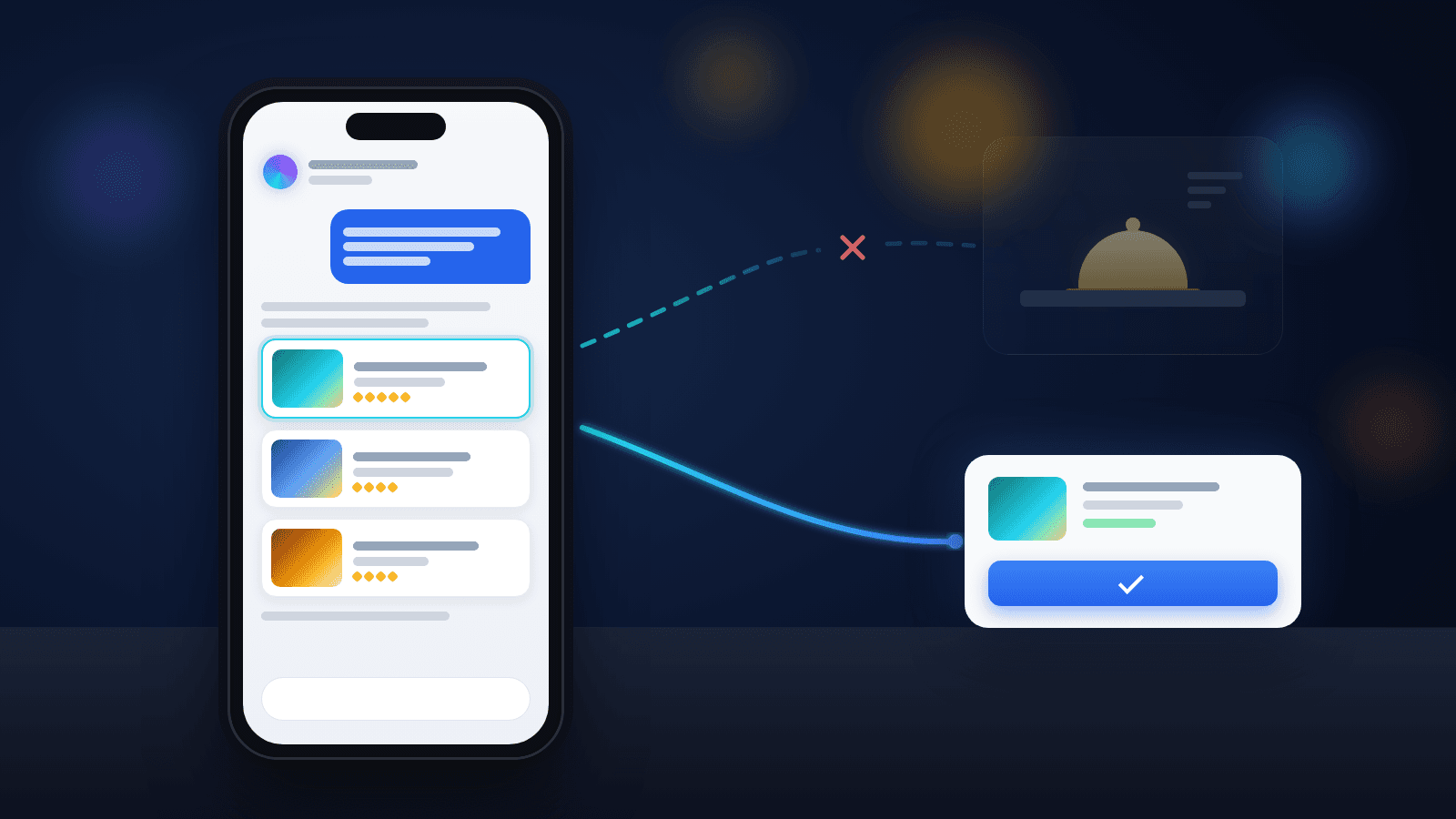
Without connected operations, that one message can trigger several phone calls, a couple of system updates, and back-and-forth between the front desk and housekeeping — all before the guest hears anything back. Multiply that by a full house and you can see where the day goes.

With an operating layer, the same request is understood, the late checkout is reflected in the PMS, the towels are assigned to housekeeping, and the guest gets a clear confirmation — with minimal manual effort. The win is not only speed. It is consistency, fewer dropped balls, and more of your team's attention freed for the interactions that actually make a stay memorable.

Technology does not replace hospitality here. It creates more room for it.

Where HeyKoala fits in

At HeyKoala, we believe an AI platform for hotels should do far more than answer questions in a chat box.

HeyKoala acts as the operating layer for hospitality. It connects guest conversations, reservations, service requests, and operational workflows into one experience. It integrates with the systems you already run, automates the repetitive work, supports guest communication across voice, WhatsApp, and web, and keeps your team covered around the clock. Our reservations agent captures and confirms booking requests; our guest feedback loop turns every stay into signal you can act on. It is one agentic AI platform, sitting on top of your stack rather than replacing it.

The result: staff spend less time coordinating routine tasks and more time creating memorable experiences — efficiency without losing the personal touch.

What an operating layer does not do

I try to be precise about this, because over-promising helps no one. An operating layer is not a rip-and-replace of your PMS, your booking engine, or your team. Fulfillment still happens in your systems and by your people. The layer's job is narrower and more valuable than "AI does everything": it makes sure no request is lost, the right system is updated, the right department is notified, and the guest is answered. It is the connective tissue, not a new set of organs.

Building hospitality for the future

The future of hospitality is not about adopting more technology for its own sake. It is about making the technology you already have work together, in a way that serves both guests and the people looking after them.

Hotels that invest in connected operations now will adapt faster as expectations keep rising, deliver more consistent service, and run more efficiently as the industry evolves. That is the future we are building toward at HeyKoala — smart automation working quietly in the background, so your people can do what they do best: deliver exceptional hospitality.

Frequently asked questions

What is an operating layer in hospitality?

An operating layer is a connective layer of software — increasingly powered by AI — that sits on top of a hotel's existing systems (PMS, booking engine, CRM, messaging, housekeeping) and coordinates them. It understands a guest request, updates the right system, routes the task to the right team, and replies to the guest, so staff no longer act as manual glue between disconnected tools.

How is an operating layer different from a PMS?

A PMS is a system of record for rooms, rates, and reservations. An operating layer does not replace it — it works above it. The PMS holds the data; the operating layer connects that data to guest conversations, service requests, and the other systems on your stack, then automates the workflow between them.

Does an AI operating layer replace hotel staff?

No. It removes repetitive coordination — the phone tag, the re-keying, the "let me check and call you back" — and hands that time back to your team. Fulfillment and the human moments of hospitality stay with your people. The layer handles volume so staff can handle value.

What systems does HeyKoala connect to?

HeyKoala is built to integrate with the tools hotels already run, including major PMS platforms, booking engines, and messaging channels like voice and WhatsApp. You can see the current list on our integrations page, and we add to it based on what our hotels need.

How quickly can a hotel see value from connected operations?

Because an operating layer sits on top of your existing systems rather than replacing them, the setup is far lighter than a platform migration. The fastest wins usually show up first in after-hours coverage and in requests that used to get lost between departments.

See your operations as one system

If your team is spending its day switching between screens and relaying messages between departments, that is the busywork an operating layer is meant to absorb. Book a demo and we will map how HeyKoala connects to your existing stack — and where you would get time back first.

Share this article

Ready to Transform Your Operations?

See how HeyKoala's AI agents can automate your hospitality workflows.