Agentic AI in Hospitality Guest Experience refers to autonomous AI systems that plan, decide, and act independently to manage the entire hotel guest journey, from pre-arrival identity verification to real-time personalised upselling, without requiring human intervention at each step. Unlike rule-based chatbots or basic automation, agentic AI connects across your PMS, CRM, access control, and loyalty platforms to deliver a guest experience that feels genuinely effortless.
Hotels adopting this technology are solving two problems at once: the operational drag of manual AI-powered hotel check-in processes, and the missed revenue that comes from inconsistent upselling. This post breaks down exactly how it works, what the numbers look like, and how hotel operators can implement it without rebuilding their tech stack.
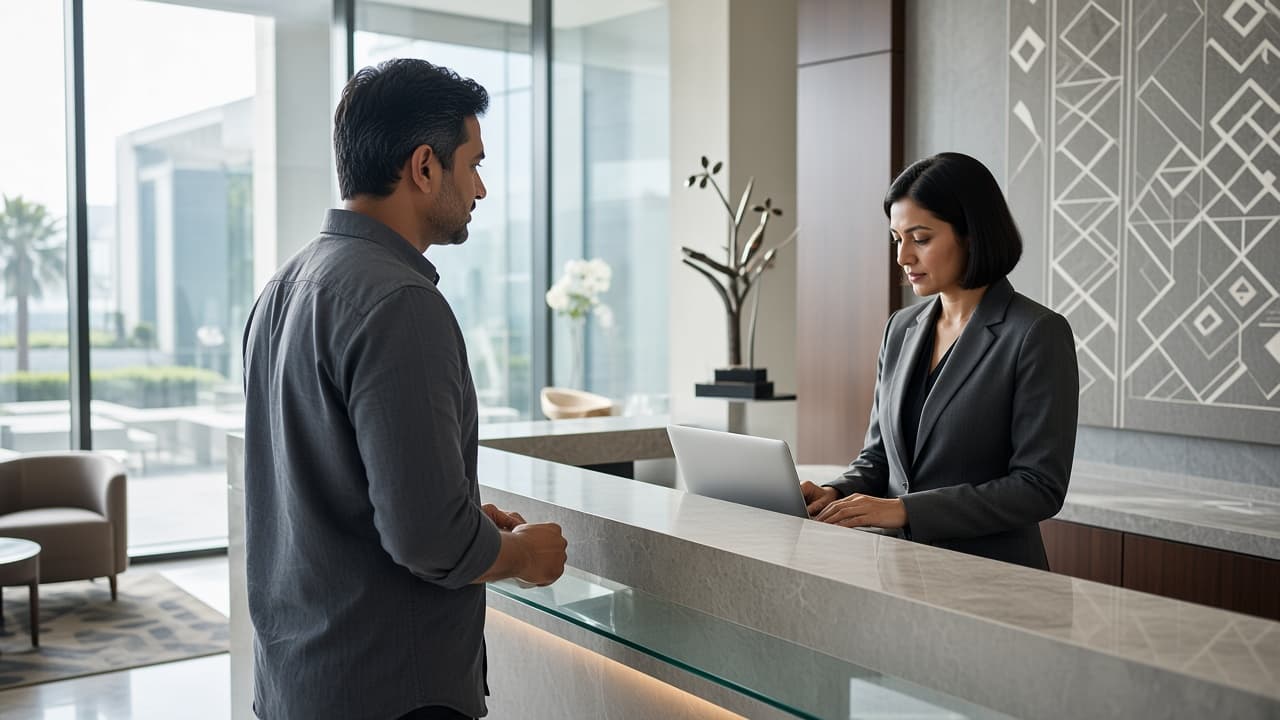
Why Traditional Hotel Check-ins Keep Letting Guests Down

Manual check-in was designed for an era before real-time data and mobile technology existed. Today it creates friction at the exact moment guests are forming their first impression of your property.
The Three Core Problems
PROBLEM 1: LONG QUEUES
According to Skift Research (2023), 65% of hotel guests say long check-in waits negatively affect their overall impression of a property, even before they have seen their room.
- Peak arrival windows of 3 PM to 6 PM on Fridays consistently overwhelm front desk teams
- A slow arrival signals to guests that their time is not valued
- Negative first impressions are difficult to reverse, regardless of room quality or service later in the stay
PROBLEM 2: DISCONNECTED GUEST DATA
Most hotels hold rich data on their guests, including stay history, dietary notes, room preferences, and spending patterns. The problem is that this data is scattered across a PMS, a CRM, a loyalty platform, and often a manually maintained spreadsheet. The result is that contactless hotel check-in technology and hotel check-in automation tools have digitised the process without making it intelligent.
- Front desk agents rarely have the full guest picture visible at check-in
- Personalisation opportunities are missed because context is not surfaced in time
- Data silos prevent loyalty recognition from happening consistently
PROBLEM 3: MISSED UPSELL REVENUE
Check-in is the highest-intent moment in the guest journey. A guest confirming their room is making decisions about their stay right now. Yet Cornell’s Center for Hospitality Research has consistently found that properties relying on human-led upselling leave substantial ancillary revenue uncaptured simply because the timing and context are never quite right.
- Front desk staff under queue pressure skip the upsell conversation entirely
- Upsell offers made without guest context feel generic and are declined
- The revenue window closes within minutes of the guest leaving the desk
What Agentic AI Actually Means for Hotel Operations

Agentic AI in Hospitality Guest Experience is not a single product. It is an architectural approach. Unlike traditional automation that follows fixed scripts, an agentic AI system:
- Sets goals: Given an objective such as completing check-in for Reservation 4821, the agent determines the optimal sequence of steps to achieve it
- Plans autonomously: It breaks complex tasks into sub-tasks and executes them across multiple connected systems without human approval at each step
- Integrates in real time: It reads and writes data across PMS, CRM, access control, payment gateways, and loyalty platforms simultaneously
- Learns continuously: Every guest interaction feeds back into the model, making responses progressively more accurate and personalised
To understand how this fits across the full guest arc from initial search through to post-stay loyalty, AI guest journey mapping in travel and hospitality provides a detailed breakdown of how agentic systems touch every touchpoint, not just arrival.
How Agentic AI Powers a Check-in That Feels Effortless

The defining feature of autonomous AI agents in hospitality is that the majority of check-in work happens before the guest arrives at the property. Here is how the process unfolds step by step.
Step 1: Pre-Arrival Authentication (48 Hours Before)
The agentic system initiates contact 48 hours before arrival through the hotel app or SMS. It handles everything in the background, so the guest arrives with nothing left to complete.
- Sends a contextual pre-arrival message confirming preferences and room type
- Verifies identity documents via secure API integration with government databases
- Pre-authorises the payment method for incidentals
- Flags special requests (dietary needs, accessibility requirements, occasion notes) to the relevant departments
- Assigns a room based on stated preferences and real-time inventory availability
Step 2: Arrival Detection and Frictionless Entry
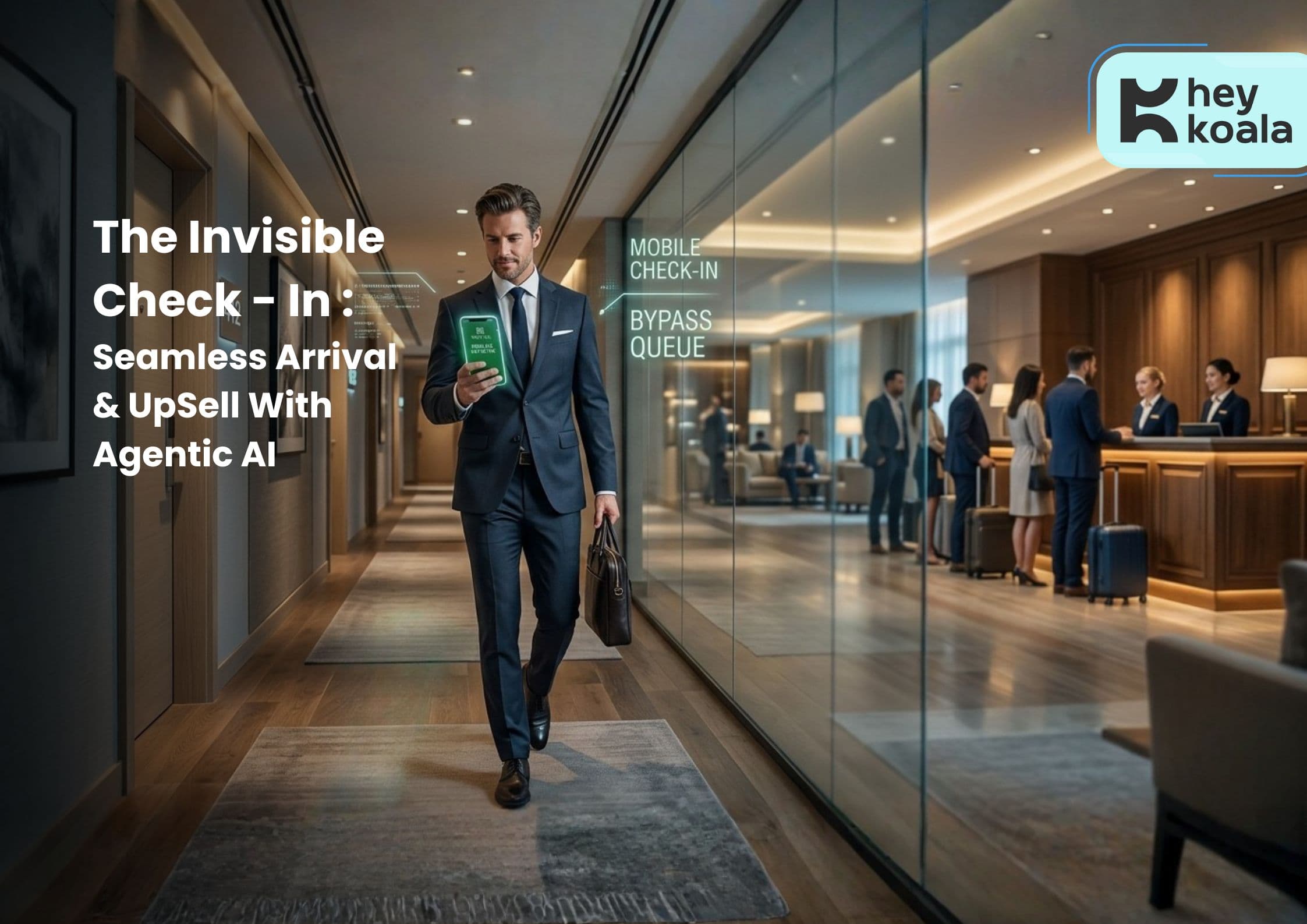
When the guest’s GPS signals, they are five minutes away via the hotel app; the system triggers room preparation automatically. At the property, identity is confirmed via QR code scan or facial recognition at a self-service kiosk in under ten seconds.
- Digital room key is delivered to the guest’s phone before they reach the lift
- Welcome message includes floor map, restaurant hours, and a personalised upgrade offer
- No queue, no paperwork, no front desk interaction required unless the guest chooses it
This is the smart hotel guest journey in practice. Guests walk in, go straight to their room, and feel like the hotel already knows them. Because it does.
Step 3: Continuous Optimisation During the Stay
Agentic AI does not clock off after check-in. It keeps working throughout the stay to surface relevant offers at the right moment.
- Monitors minibar usage, spa bookings, and restaurant activity to identify upsell opportunities
- Detects return flight delays via integrated travel APIs and automatically extends late checkout
- Proactively surfaces dining or experience offers based on weather, availability, and guest history
Properties using AI-powered hotel check-in automation report a 40% reduction in front desk wait times and a 28% improvement in Net Promoter Score within the first six months. (McKinsey & Company, The State of AI in Travel & Hospitality, 2024)
How AI Upselling Turns Arrival Into a Revenue Moment

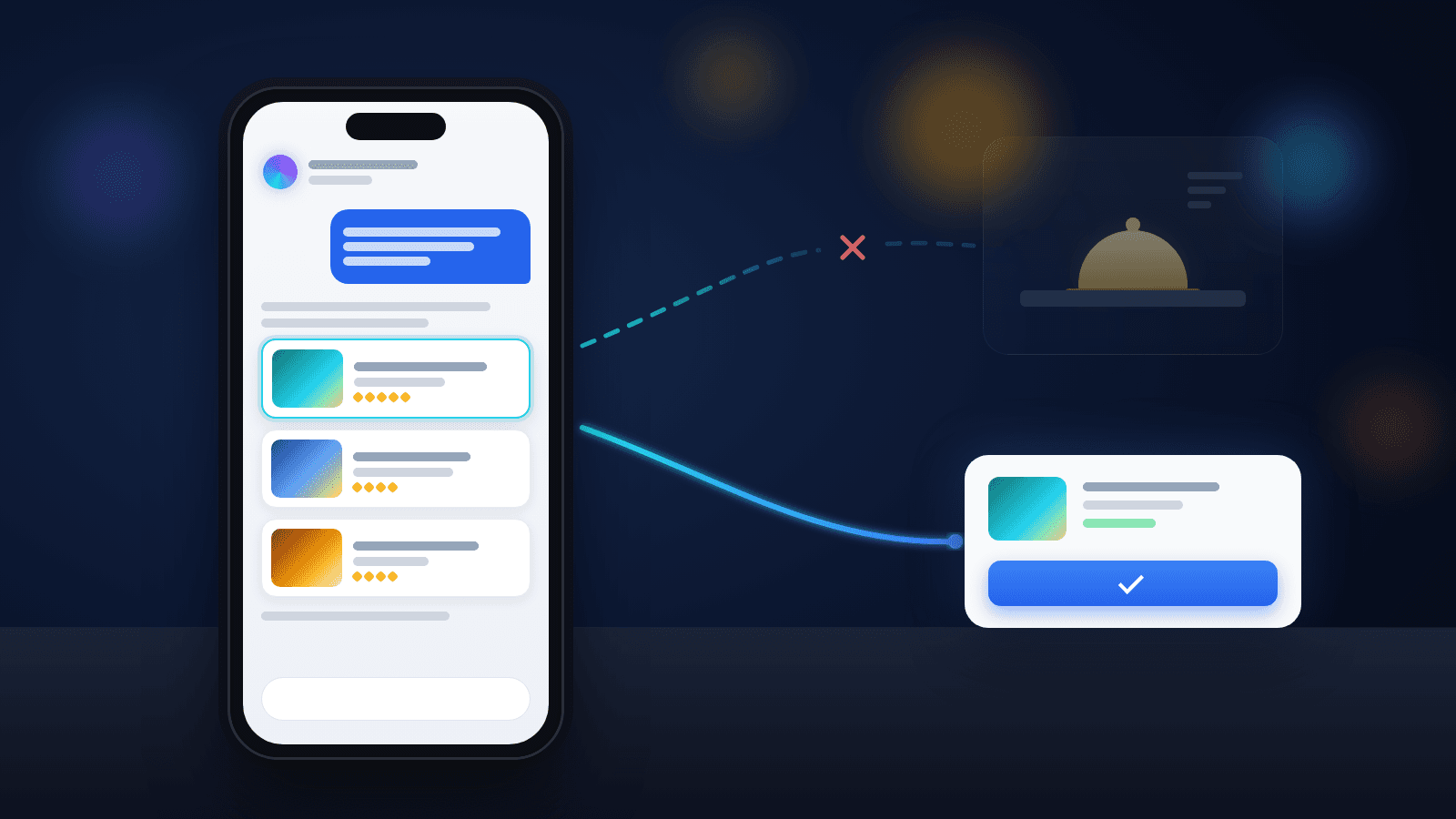
Guests do not object to upselling. They object to feeling sold to. When an offer is relevant, well-timed, and clearly made for them specifically, they welcome it. That is the core difference between AI upselling and the traditional front desk approach.
How the Personalisation Engine Works
At the moment of arrival, the agentic system assembles a dynamic profile for every guest. It combines the following data points to calculate the highest-probability offer:
- Loyalty tier and lifetime value with the property
- Previous room type preferences and upgrade history
- Current booking pattern (last-minute vs early planner, business vs leisure)
- Real-time inventory: which upgrades are actually available tonight
- Local context: weather, nearby events, restaurant availability
- Response history: how this guest has responded to past offers
The result is personalised hotel upselling that feels like a concierge recommendation rather than a sales pitch. The offer is presented at the precise moment the guest is most receptive, immediately after identity verification and before they are distracted by navigation.
The Revenue Impact in Numbers
A 250-room urban hotel deploying agentic AI upselling alongside automated check-in recorded the following in the quarter after rollout:
✓ 25% uplift in ancillary revenue per occupied room
✓ Room upgrades accounted for the largest share of the gain
✓ Late checkout fees and pre-booked F&B experiences drove the remainder
✓ Guest satisfaction scores for AI upsell offers were 18 points higher than for equivalent offers made by front desk staff
For broader industry benchmarks on how AI upselling in hospitality is reshaping hotel revenue strategy, the Phocuswire Hotel Technology Report tracks adoption rates and revenue data across property categories globally.
Implementation, Benefits, and the Heykoala Approach

Deploying agentic AI does not require replacing your existing technology stack. The most effective implementations layer intelligence on top of what you already have, using a structured four-phase rollout.
The Four-Phase Deployment Roadmap
Phase 1: Audit and Data Readiness (Weeks 1-3)
- Map all existing guest data sources across PMS, CRM, and loyalty platforms
- Identify integration points and any data quality gaps
- Confirm identity verification and biometric data compliance requirements for your jurisdiction
Phase 2: Integration and Configuration (Weeks 4-8)
- Connect the agentic platform to your PMS via open APIs (Opera, Mews, and Cloudbeds all support this)
- Integrate access control, payment gateway, and loyalty systems
- Configure the upselling engine with your offer catalogue, pricing rules, and brand tone
Phase 3: Parallel Pilot (Weeks 9-12)
- Run agentic check-in for opt-in guests alongside the traditional front desk process
- Measure NPS, upsell conversion rates, and staff workload side by side
- Use pilot data to fine-tune offer logic and arrival flow before full rollout
Phase 4: Full Deployment and Continuous Learning
- Scale to the full property
- Conversion data and guest feedback into the model automatically
- Offers and arrival flows become progressively sharper with every stay
What Hotels Actually See After Deployment
✓ Check-in time drops from 8 to 12 minutes down to under 90 seconds
✓ NPS improves by 20 to 30 points for guests using the agentic arrival flow
✓ Ancillary revenue increases by 20 to 30% per occupied room
✓ Front desk teams shift from transactional processing to genuine relationship-building
✓ Staff satisfaction improves as repetitive administrative work is automated
Heykoala’s autonomous AI platform for hotels delivers all of this as a unified system: pre-arrival orchestration, frictionless check-in, real-time upselling, and post-stay loyalty in a single platform built specifically for hospitality. For properties looking to implement Agentic AI in Hospitality Guest Experience without a year-long IT project, it is worth understanding how a purpose-built hospitality platform differs from adapting a generic automation tool.
Where Agentic Hospitality Is Heading

The front desk is not disappearing. But its role is fundamentally shifting. Within three to five years, the transactional elements of check-in including identity verification, room assignment, and key delivery will be handled entirely by agentic systems at most mid-to-upscale properties.
What remains at the desk will be pure hospitality work:
- Handling unexpected guest situations that require human empathy and judgement
- Providing local knowledge and personalised recommendations
- Building relationships with high-value repeat guests
- Managing complex group or VIP arrivals
Hotels investing in Agentic AI in Hospitality Guest Experience now are building the guest expectation baseline for the next decade. Properties that move early gain a genuine competitive advantage in efficiency, NPS, and direct booking rates. The technology is mature, the integrations exist, and the ROI is documented.
Ready to see it in action? Explore what Heykoala can do for your property.
Conclusion
A great hotel stay begins long before the guest reaches their room. It begins the moment they feel the property already understands what they need, and the arrival experience is where that feeling is either built or broken.
Agentic AI in Hospitality Guest Experience makes it possible to build that feeling consistently across every guest, every shift, and every season. Not by replacing the human warmth that defines great hospitality, but by removing the friction that prevents it from showing up reliably.
If you are ready to make check-in invisible and turn upselling into genuine service, start the conversation with Heykoala. The invisible check-in is closer than you think.
Frequently Asked Questions:
1. What is Agentic AI in Hospitality Guest Experience?
Agentic AI in Hospitality Guest Experience refers to autonomous AI systems that independently plan and execute tasks across the entire guest journey, including pre-arrival verification, contactless check-in, personalised upselling, and post-stay follow-up. Unlike basic automation or chatbots, agentic systems integrate with your PMS, CRM, and access control platforms to act on real-time data without requiring human approval at each step.
2. How is agentic AI different from the contactless check-in tools hotels already use?
Most contactless hotel check-in technology digitises a single step, such as digital key delivery or mobile registration. Agentic AI orchestrates the entire arrival sequence end to end. It handles identity verification, room assignment, payment pre-authorisation, preference fulfilment, and upsell offer delivery as a connected, intelligent workflow rather than isolated automations.
3. Does deploying agentic AI require replacing our existing PMS or CRM?
No. The most effective deployments layer agentic AI on top of your existing systems via open APIs. Platforms like Opera, Mews, and Cloudbeds all support API integration, so the agentic system reads and writes data across your stack without requiring a system replacement. A structured integration phase typically takes four to eight weeks.
4. How does AI upselling work without feeling intrusive to guests?
AI upselling in hospitality works by assembling a real-time guest profile at the moment of arrival, combining loyalty tier, room history, booking behaviour, local context, and available inventory. The system presents the most relevant offer at the precise moment the guest is most receptive, immediately post identity verification. Because the offer is contextually accurate and well-timed, guests consistently rate AI-generated offers as feeling more like a concierge recommendation than a sales pitch.
5. What kind of revenue uplift can hotels expect from agentic AI upselling?
Properties deploying agentic AI upselling alongside automated check-in typically report a 20 to 30% increase in ancillary revenue per occupied room. One documented case study of a 250-room urban hotel recorded a 25% uplift in the quarter following rollout, driven primarily by room upgrades, late checkout fees, and pre-booked F&B experiences. Results vary based on property type, inventory, and offer catalogue depth.
6. Is agentic AI check-in suitable for luxury hotels that prioritise personal service?
Yes, and it is increasingly preferred by luxury properties. Agentic AI handles the transactional elements of arrival (verification, key delivery, room readiness) so that staff are freed entirely for relationship-based hospitality. Guests who want a personal interaction can still choose it, while guests who prefer frictionless arrival get exactly that. The technology removes the process from check-in, leaving room only for genuine service.
7. How long does it take to see measurable results after deploying agentic AI?
Most hotels see measurable improvements in check-in speed and NPS within the first 30 to 60 days of the pilot phase. Upsell revenue uplift typically becomes statistically significant within one full quarter of operation, as the system accumulates enough guest interaction data to sharpen its personalisation logic. Full ROI is commonly achieved within six to twelve months of complete deployment.
Free tool · no signup
What is your front desk missing each month.
Missed calls and unanswered WhatsApp never reach your PMS, so they never make the morning report. Move five sliders and see what they cost your property, per month and per year.